Skip to Content

Muscat

OVERVIEW

Muscat rewards a route rather than a checklist. The Grand Mosque, Royal Opera House, Qurum, Old Muscat and Mutrah sit across a long coastal capital, while the sea opens another set of choices beyond the streets.
Three to four nights gives the journey room to change pace. Spend time with the city and old harbour, give a day to Bandar Khayran or the Daymaniyat Islands if the water matters to you, then let the road towards Nizwa become part of the trip itself. Fanja and Birkat Al Mouz mark the shift from the capital towards Oman's interior rather than leaving the drive as empty transfer time.

WHEN

November to April

HOW LONG

3 to 4 nights

PHYSICAL RATING

2 out of 10
Podcast cover: Travel to Muscat

WAVE STORIES · MUSCAT

BETWEEN THE HARBOUR AND THE MOUNTAINS

Listen to Muscat’s story, from city landmarks to sea and inland.

00:00 00:00

WHAT TO SEE AND DO IN MUSCAT

Start with the Sultan Qaboos Grand Mosque while the day is still young. Its courtyards, arcades and main prayer hall make it one of the clearest introductions to contemporary Omani architecture. Non-Muslim visiting periods and dress requirements apply, so current arrangements should be checked before travel.

READ MORE + READ LESS -

The Royal Opera House gives the city another register. You do not need an evening performance for it to belong in the itinerary; daytime tours offer another way to experience the building, subject to current availability. Qurum Beach and the surrounding leisure areas then give the day somewhere to slow down rather than filling every hour with another monument.

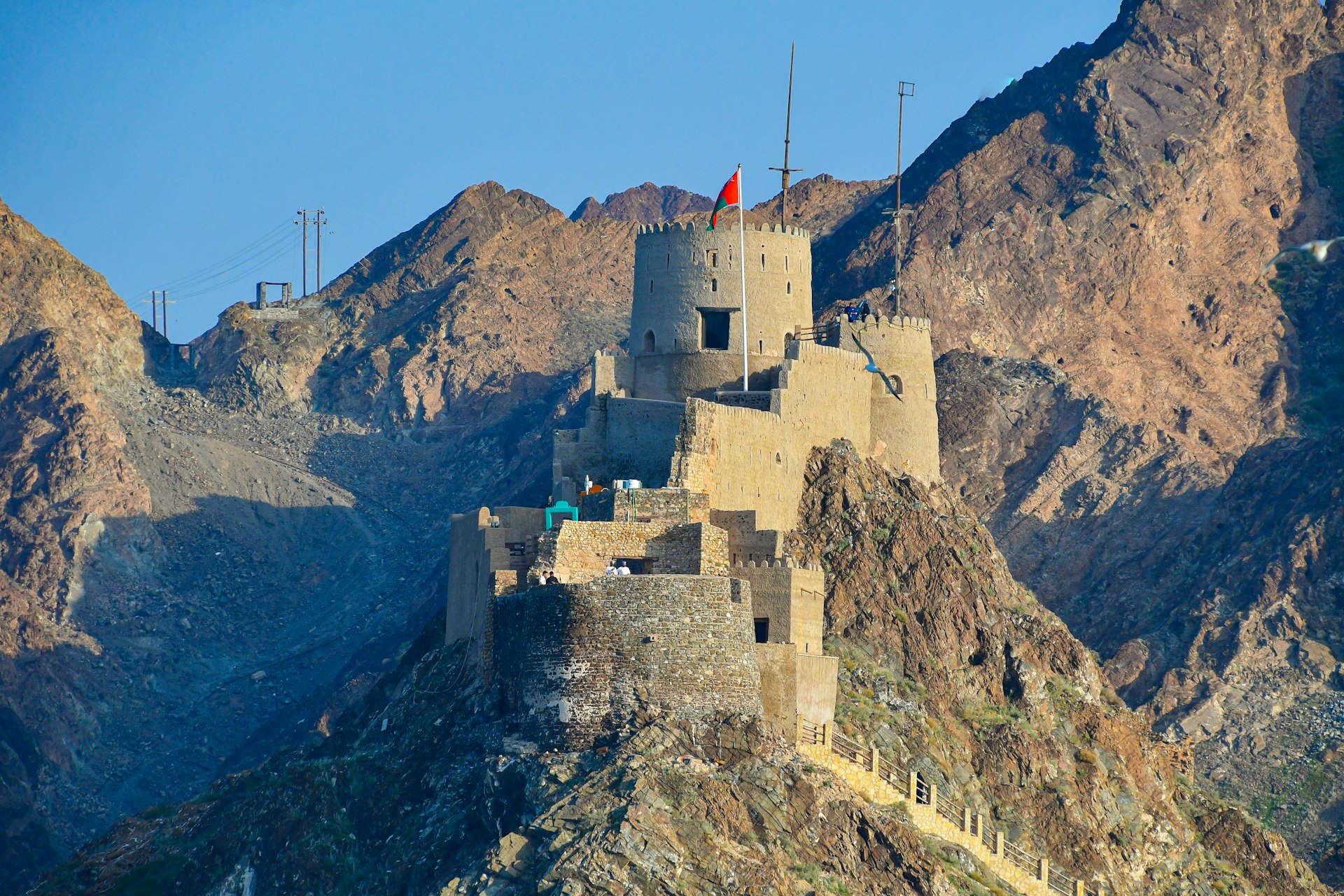
Old Muscat and Mutrah work best as a sequence. Around Al Alam Palace, the forts frame the ceremonial quarter; Al Mirani is now a visitor attraction in its own right rather than simply a landmark viewed from below. Continue towards the harbour and Mutrah Corniche, then allow the souq to sit naturally within the same part of the day.

Food should not be left as an afterthought. The Wave Holidays route includes Rozna, where Omani cooking and a heritage-inspired setting bring another part of the country's culture into the journey.

Then Muscat can turn towards the sea. Around Bandar Khayran, dolphin watching, diving and snorkelling keep the experience closer to Muscat's coast. The Daymaniyat Islands offer something different: a protected offshore marine environment where the reserve itself becomes the reason for going.

MUSCAT, THREE DIRECTIONS

THE CITY

Choose a city-led Muscat stay when this is your first encounter with Oman and context matters more than activity count.
The Grand Mosque, Royal Opera House, Qurum, Old Muscat and Mutrah show different versions of the capital: religious and civic architecture, the old harbour, contemporary cultural life and the everyday movement of the waterfront.
The experience works better when these areas are grouped intelligently rather than crossed back and forth in pursuit of a longer sightseeing list.


THE SEA

The sea changes what Muscat can be. Bandar Khayran works well when you want the coastline, sheltered inlets, dolphin watching or time in the water without making the entire day about an offshore reserve.
Daymaniyat is the stronger choice when snorkelling, diving and the protected marine environment are the purpose of the trip.
We plan diving and snorkelling at Daymaniyat throughout the year, subject to sea conditions. July to September is the main period associated with whale-shark encounters, although wildlife sightings are never guaranteed. The strongest overall visibility is generally associated with November to April.


THE ROAD INLAND

Muscat does not need to end when you leave the city. On the Wave Holidays route towards Nizwa, Fanja Heritage House gives the transition inland a smaller, more personal heritage stop before the landscape begins to change.
Farther along, Birkat Al Mouz brings mud-brick architecture, palms and the falaj landscape into the journey before Nizwa itself becomes the next destination.
Falaj Al-Khatmeen at Birkat Al Mouz forms part of Oman's UNESCO-listed Aflaj Irrigation Systems. The village itself should not be described as a standalone UNESCO World Heritage Site.
The result is simple: the journey inland starts before you reach Nizwa.


BEFORE YOU GO

Muscat is spread across several districts, so good routing matters more than trying to see everything.:

  • Plan by area. Group visits geographically rather than repeatedly crossing the city.
  • Check access before visiting the Grand Mosque and Royal Opera House. Visiting periods and tour availability can vary.
  • Treat Daymaniyat landing and marine activities separately. Diving and snorkelling can be planned year-round, while island landing is restricted from May through October.
  • Keep marine plans flexible. Sea conditions can affect routes, and wildlife sightings are never guaranteed.

Best Time to Visit Muscat

  • November to April: Our preferred all-round period for Muscat. Cooler conditions make it easier to combine cultural sights, Mutrah, coastal time and the road inland. These months also overlap with the permitted landing season at the Daymaniyat Islands.

  • May & October: Both months can work, but warmer conditions make early starts, indoor visits and slower afternoons more important. The right pace and hotel location matter more than in winter.

  • June to September: This is not our preferred period for a conventional city-led stay, but marine travel follows a different pattern. Diving and snorkelling at Daymaniyat can still be part of the trip, and July to September is associated with whale-shark encounters. Island landing remains restricted.

 BUILD MUSCAT AROUND WHAT COMES NEXT

Tell us whether Muscat is the main stay, a marine stop or the start of a longer Oman journey, and we'll shape the nights and route around it.

WHO THIS TRIP SUITS

Muscat works particularly well for first-time visitors, couples and families who want culture, comfortable pacing and access to the coast.
Divers and snorkellers can use it as a marine base, while travellers continuing to Nizwa can treat Muscat as the opening chapter of a wider Oman journey.

STAYING THERE

Muscat is spread out, so choose the area around the trip rather than the hotel brand. For a three- or four-night stay, changing hotels usually adds more friction than value.

  • QURUM & SHATTI AL QURUM: A strong all-round base for restaurants, cultural visits and balanced access across the city.
  • MUTRAH: Best when the old harbour, corniche and a stronger sense of place matter more than resort facilities.
  • AL MOUJ & SEEB SIDE: Useful for airport access, modern waterfronts and itineraries with marine departures.
  • COASTAL RESORT AREAS: Best when the resort itself is part of the holiday, not simply somewhere to sleep between sightseeing days.

FAQS


For most first-time visitors, three nights is a strong base. It gives enough time for the main cultural areas, Old Muscat and Mutrah without turning them into a checklist.

Add a fourth night if you want a Daymaniyat or Bandar Khayran day, meaningful resort time or a slower pace.

For the broadest mix of city and coastal activities, we recommend November to April.
May and October are shoulder periods. June to September is not our preferred window for a conventional city-led stay, although marine-focused travel can follow a different seasonal logic.
Not as a whole. Mutrah and individual neighbourhoods can be explored on foot, but Muscat's main districts and attractions are spread across a long urban area. A driver, taxi or planned transfers are normally needed between different parts of the city.
Yes. Daymaniyat is one of the principal marine experiences that can be included in a Muscat stay and is part of the Wave Holidays route. Diving and snorkelling can be planned throughout the year, subject to conditions, while landing and camping on the islands are restricted from May through October.
The Wave Holidays route uses Fanja Heritage House and Birkat Al Mouz to make the transition inland part of the journey. Fanja adds a smaller heritage stop, while Birkat Al Mouz introduces the mud-brick and falaj landscape before Nizwa. Falaj Al-Khatmeen at Birkat Al Mouz forms part of Oman's UNESCO-listed Aflaj Irrigation Systems.