MOROCCO
LUXURY MOROCCO TOURS & TAILOR-MADE JOURNEYS
WHY TRAVEL TO MOROCCO WITH WAVE HOLIDAYS?
Medinas, mountains and desert belong in one well-paced route.
Morocco changes quickly between places. Marrakech is intense and theatrical; Fez feels older and more intricate; the High Atlas brings cooler air and village landscapes; the Atlantic coast slows the journey around Essaouira. A good itinerary balances these contrasts without turning every day into a transfer. We shape the route around your interests, with considered stays, private guiding where it adds value and enough time to understand each place.
PLAN YOUR MOROCCO JOURNEY
Tell us which parts of Morocco interest you, and we’ll shape the route, stays and pace around them.
WHAT TO SEE AND DO IN MOROCCO
Medinas, mountain roads and Atlantic towns reward a carefully judged route.
A COUNTRY THAT CHANGES WITH THE ROAD
Marrakech and Fez are both historic cities, yet they ask for different rhythms. Marrakech is outward-facing and energetic, while Fez rewards slower exploration through its layered medina and craft traditions. Between them, the road can lead through cedar country, farmland and smaller towns rather than simply joining one famous sight to another.
South of Marrakech, the High Atlas changes both the landscape and the pace. Valleys, villages and mountain passes create a natural break before the route continues towards fortified settlements and the desert margins. Time matters here: fewer overnight stops usually produce a better journey than trying to collect every landmark.
ESSAOUIRA, WHERE THE ATLANTIC SLOWS THE PACE
Essaouira’s medina and harbour feel distinctly different from inland Morocco. The UNESCO-listed fortified town reflects centuries of exchange, while Atlantic wind, seafood and a walkable scale make it an effective pause after Marrakech.
It works best as more than a hurried day trip. A two-night stay leaves room for the ramparts, workshops and coast without compressing the experience into a return drive. For travellers balancing cities, mountains and desert, Essaouira can give the route welcome breathing space.
LOOKING FOR INSPIRATION?
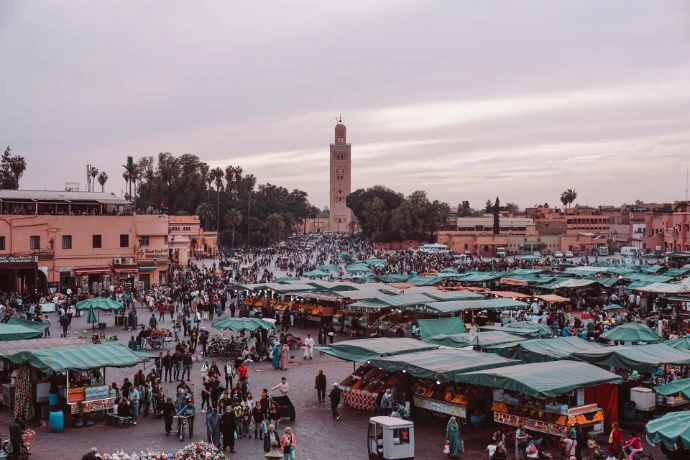
A DAY WELL SPENT IN MARRAKECH
Begin early in the medina, when lanes and courtyards are quieter. Leave time for architecture and craft, pause for lunch away from the busiest squares, then return towards Jemaa el-Fna as the city changes pace in the evening.
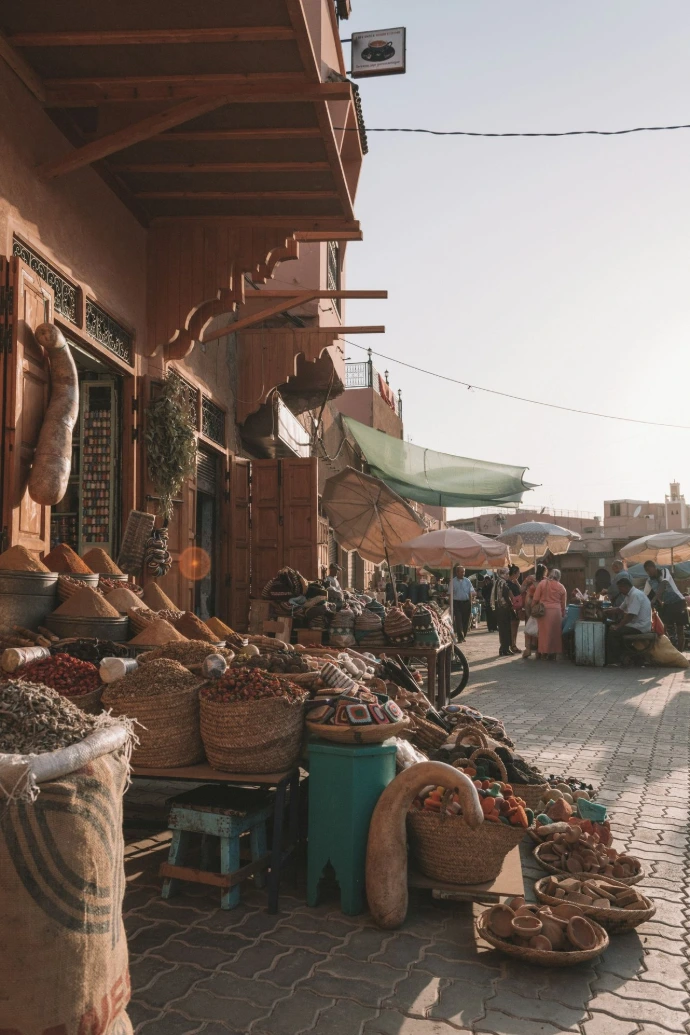
FROM FEZ TO VOLUBILIS
Fez deserves time on foot, but the region also opens into imperial Meknes and the Roman archaeological site at Volubilis. Together they reveal different historical layers without requiring a long change of base.
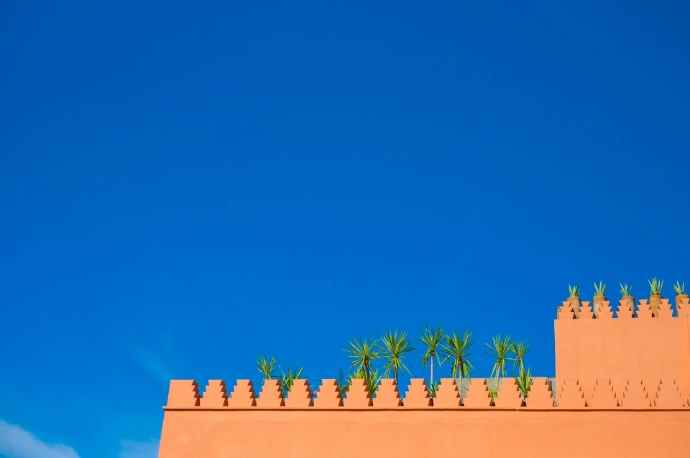
AIT BEN HADDOU AND THE SOUTH
Crossing the High Atlas towards Ait Ben Haddou marks a clear transition from city to southern landscapes. The UNESCO-listed ksar works best within a wider route through valleys and desert-edge towns, not as an isolated photo stop.
FAQs
Spring and autumn are usually the most comfortable seasons for combining imperial cities, mountains and desert. Coastal conditions differ, so timing should follow the route rather than one national rule..
Allow eight to twelve nights for a first journey combining two cities with either the mountains, Atlantic coast or desert. Longer routes work better when the south is included.
Yes, if time allows. Marrakech is more immediate and energetic; Fez is denser, older and slower to read. Together they give a stronger first impression than treating one as a substitute for the other..
Yes, when the route gives it enough time. Reaching the desert requires long road journeys, so it suits travellers who value landscape and gradual transitions as much as the dunes themselves.
A private guide is especially useful in the medinas of Fez and Marrakech, where context and navigation matter. Elsewhere, guides can be used selectively rather than attached to every day.