Dimaniyat Islands, Oman
A WILDER BLUE, JUST OFF MUSCAT
OVERVIEW
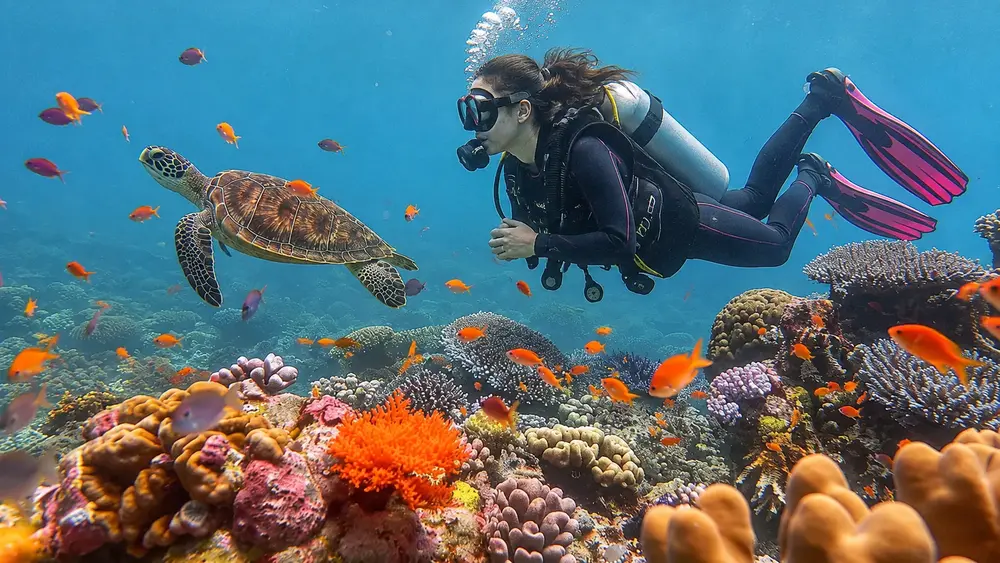
The experience is less about seeing the islands themselves than spending time in the water around them. With a private boat, the day can follow the conditions: swim, snorkel or dive where the sea and visibility are best, then move when conditions suggest somewhere better.
The reserve comes first. Visitor access follows conservation rules, which is part of what keeps Daymaniyat worth the trip.
WHEN
HOW LONG
Half day
PHYSICAL RATING
3 out of 10
WAVE STORIES • DAYMANIYAT
BENEATH OMAN’S BLUE
Listen to a journey through coral reefs, sea turtles and open water.
WAVE STORIES • DAYMANIYAT
BENEATH OMAN’S BLUE
Listen to a journey through coral reefs, sea turtles and open water.
WHAT TO SEE AND DO IN DAYMANIYAT
What you see is never fixed. Turtles, rays and other marine life may appear, but conditions and chance always play a part. The reef itself can be just as memorable as any wildlife encounter. That unpredictability is part of the experience.
BEFORE YOU GO
Daymaniyat is close to Muscat, but the reserve sets the rules. Access, sea conditions and wildlife can all affect how the day unfolds.
- Entry to the reserve requires a permit.
- Landing on the islands is prohibited from May through October, which also rules out camping during this period.
- Boat-based marine trips may still be possible during this period, subject to current regulations and sea conditions.
- Wildlife sightings are never guaranteed.
- Do not touch or stand on coral.
- Keep a respectful distance from turtles and other marine life.
- A private boat gives you more flexibility, but not exclusive access to the reserve.
- Crossing time varies with the departure point and sea conditions.
The Environment Authority regulates permits and seasonal access specifically to protect nesting turtles, reefs, birds and other wildlife.
Best Time to Visit
- November to April: The more complete experience, combining time in the water with the possibility of landing where permitted.
- May to October: Wildlife varies by species, timing and conditions, so neither season should be chosen around a guaranteed sighting.
TAKE THE DAY OFFSHORE
We’ll arrange the private boat, permit and timing, then let the conditions shape the day.
WHO THIS TRIP SUITS
Come for the reef, the time at sea and the freedom to follow the conditions, not for resort facilities or guaranteed wildlife.
MAKING A DAY OF IT
There are no permanent hotels on the islands. Camping is regulated and only permitted seasonally in approved areas.
WHAT TO KNOW:
- Choose the boat and crew as carefully as the departure time.
- Sea conditions always take priority.
- Bring swimwear, a towel and sun protection.
- Reef-safe sunscreen is preferable.
- Leave nothing behind.
- Tell the crew before departure if anyone in the group is uncomfortable in open water.
FAQS
Yes. Entry to the reserve requires a permit. We can arrange it as part of your trip.
No. A standard snorkelling trip can suit beginners, provided you are comfortable in open water and follow the crew’s guidance.
Possibly, but never certainly. Sea turtles are commonly associated with the reserve, while sharks and other marine encounters depend on conditions, location and chance.