Blind & Low-Vision Travel in Oman and Beyond
OVERVIEW
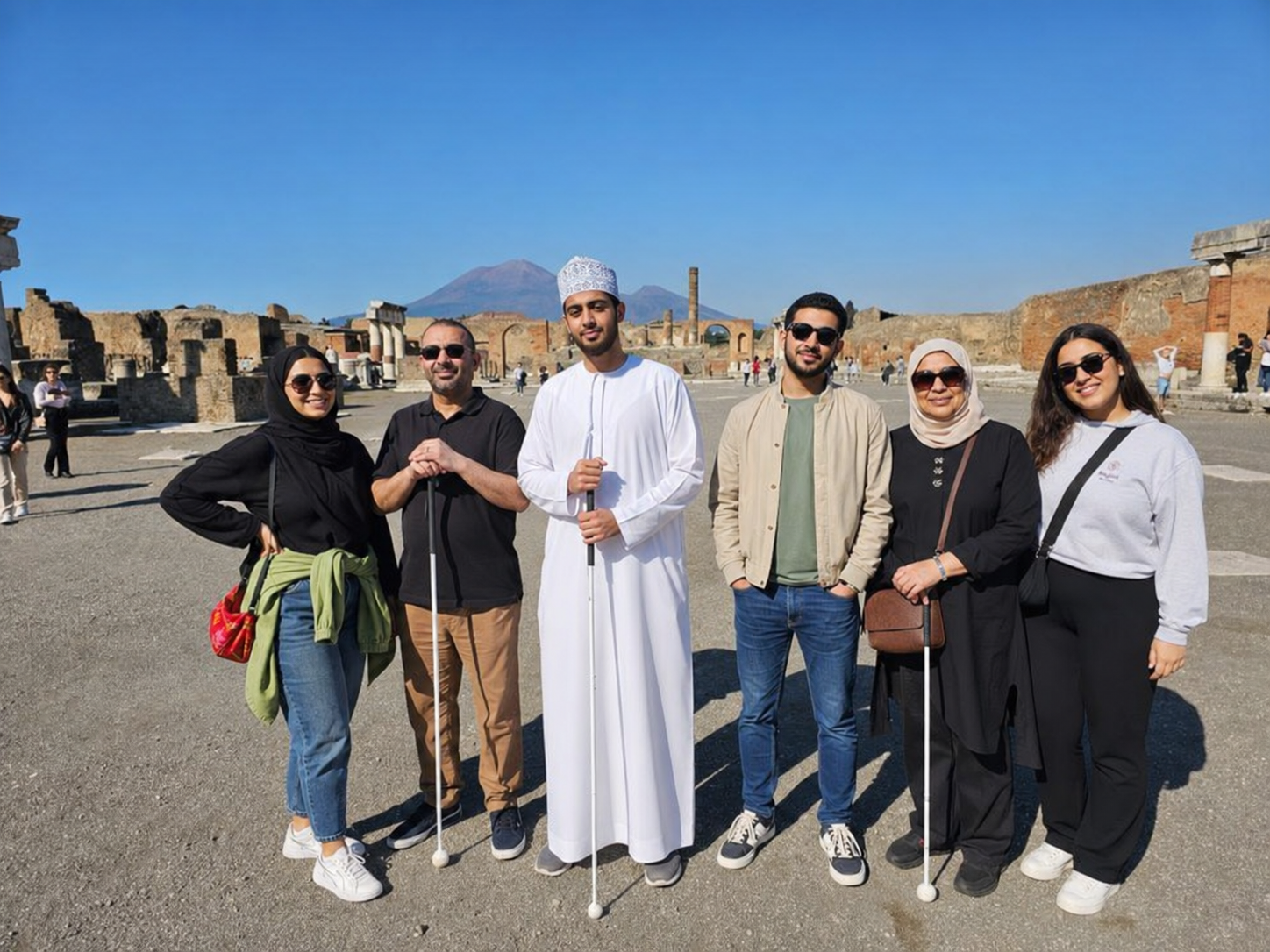
We plan private journeys for families and friends, as well as educational group travel for schools and universities. Some trips explore Oman through touch, sound, scent and conversation; others take Omani travellers abroad to destinations with genuinely useful tactile and sensory experiences.
The support is planned from the start, not added afterwards.
WHEN
HOW LONG
Flexible
PHYSICAL RATING
1 out of 10
WAVE STORIES · BLIND & LOW-VISION TRAVEL
Travel Beyond Sight
How thoughtful planning can make travel work naturally through touch, sound and description.
WAVE STORIES · BLIND & LOW-VISION TRAVEL
Travel Beyond Sight
How thoughtful planning can make travel work naturally through touch, sound and description.
WHO WE PLAN FOR
The itinerary is shaped around how the group wants to travel, including the pace, guide approach and practical details that can make each day easier to navigate.
OMAN FOR THE VISITING TRAVELER
Rather than assuming every stop is equally accessible, we plan the route, timing and guide support around the actual conditions at each place.
Plan It Around Your Group
Tell us who is travelling, the group size and any practical requirements. We’ll shape the itinerary, guide support and pace around that from the start.
THE WORLD FOR OMANI TRAVELERS
In Tokyo, the Ikeda Teruko Memorial Tactile Museum is built around touch. Its permanent display includes a relief of Leonardo da Vinci’s Last Supper, alongside changing exhibitions that can include tactile objects, textures and sound. Visits are by appointment.
Beyond individual museums, we plan around what a destination genuinely offers through touch, sound, taste and description, rather than assuming a place is accessible simply because it appears suitable online.
WHO SHOULD GET IN TOUCH
- A university or school administrator planning educational travel for blind or low-vision students
- A family planning a trip with a blind or low-vision member
- A group of blind or low-vision friends who want to travel together without relying on one person as the designated helper
FAQS
We work directly with the administrator on group size, learning objectives and practical requirements, then shape the itinerary around experiences that allow students to engage through touch, sound, description and participation.
That is why we plan each stop around the actual conditions, the guide support required and the pace that works for the traveller.