تخطي للذهاب إلى المحتوى

Salalah,Oman

WHERE THE MONSOON MEETS THE ARABIAN SEA


نظرة عامة

Salalah is the gateway to Dhofar, a region that changes character with the seasons. During Khareef, mist settles over the mountains and the plains turn green. In the clearer months, the focus shifts to open beaches, ancient ports, frankincense landscapes and long coastal drives.

The best journeys make room for both the scenery and the story behind it. With several nights in one well-chosen base, Salalah becomes more than a collection of day trips. It offers a slower and more considered way to experience southern Oman.


WHEN

June to Sep

HOW LONG

3 to 4 nights

PHYSICAL RATING

3 out of 10
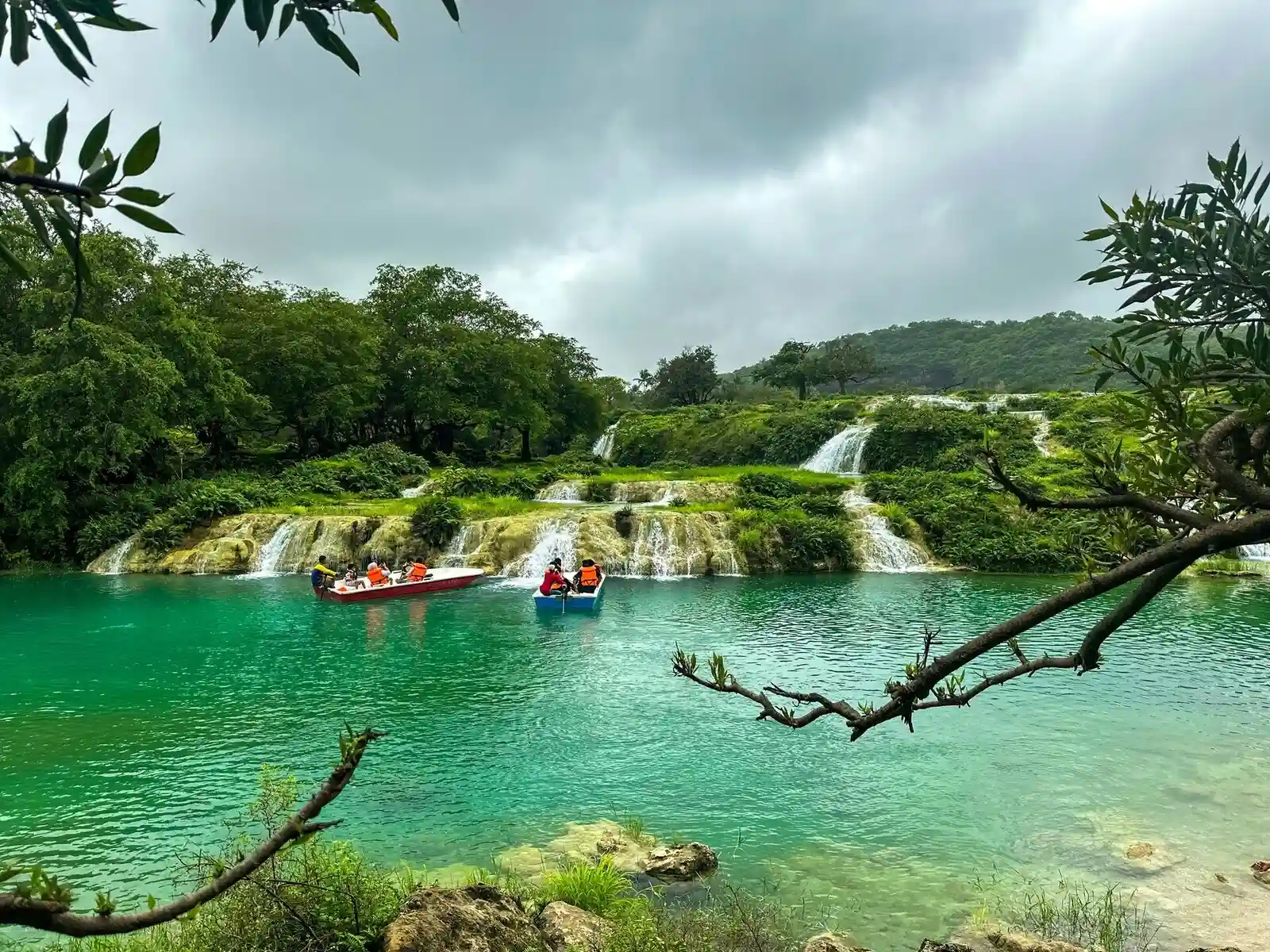
Khareef landscape in Salalah, Oman

WAVE STORIES · SALALAH

WHEN THE MOUNTAINS TURN GREEN

Listen to a journey through mist, frankincense and sea.

00:00 00:00

WHAT TO SEE AND DO IN SALALAH

During Khareef, begin east of the city at Wadi Darbat. Mist softens the surrounding hills, water returns to the valley and seasonal cascades may appear. Outside the monsoon, the same landscape is quieter and drier, with some water remaining in parts of the wadi.

To the west, Mughsail brings together pale sand, cliffs and the natural blowholes near Marneef. More remote coastal stretches can be added as dedicated journeys, with access and sea conditions checked before departure rather than treated as casual stops.

Salalah’s deeper story lies in frankincense. Al Baleed, the ancient port of Sumhuram at Khor Rori and the trees of Wadi Dawkah belong to the UNESCO-listed Land of Frankincense, alongside the caravan oasis of Shisr. Together, they explain how a resin harvested in Dhofar became one of the ancient world’s most important traded goods.

قبل الذهاب

Salalah is easy to enjoy once the season, hotel and daily routes have been chosen with care. We rate a standard journey 3 out of 10. The challenge comes from driving distances, humidity during Khareef and occasional uneven ground, not from demanding physical activity.


  • Khareef usually runs from mid-June into September.
  • Expect mist, cloud and light rain rather than reliable beach sunshine.
  • Waterfalls and flowing valleys are seasonal and cannot be guaranteed.
  • July and August usually offer the fullest Khareef atmosphere, but also attract the most visitors.
  • The eastern valleys, western coast and frankincense sites should be planned on separate days.
  • Remote beaches require their own route, with access checked locally.
  • Three nights cover selected highlights. They do not allow a relaxed exploration of Dhofar.
  • The choice of resort directly affects daily driving time.

Khareef conditions and the appearance of natural sites vary from one year and week to another.

Best Time to Visit Salalah

  • Mid-June to September: Choose this period for Khareef, with mist, light rain, cooler conditions and green mountain scenery. July and August usually bring the strongest seasonal atmosphere and the highest demand.
  • Mid-September to late October: A particularly interesting transition, with clearer views, fewer visitors and the possibility of lingering green landscapes. Conditions vary each year.
  • November to May: Better suited to travellers who prefer clearer skies, beach time, archaeology and long coastal journeys without the Khareef crowds.

 CHOOSE YOUR SALALAH 

Tell us whether you are drawn to Khareef mist or clear coastal days, and we’ll shape the stay and journeys across Dhofar accordingly.

لمن تناسب هذه الرحلة

Salalah is for travellers drawn to places that change with the season. Choose Khareef for mist, green escarpments and cooler days rather than reliable beach sunshine. Outside Khareef, expect clearer light, quieter roads and more time for the coast, archaeology and frankincense country.

الإقامة هناك

Choose your resort by location, not star rating. Al Baleed is better placed for the city, museum and western coast, while Mirbat offers greater seclusion and easier access to Wadi Darbat, Sumhuram and eastern Dhofar. For a four-to-six-night stay, one carefully chosen base usually makes for the more effortless journey.

WHAT TO KNOW:

  • Stay near Al Baleed for easier access to the city and western routes.
  • Stay closer to Mirbat for privacy and the eastern side of Dhofar.
  • Book early for July and August.
  • A private-pool villa can be worthwhile when resort time matters.
  • Do not choose a hotel by category alone. Location has a direct effect on the pace of the trip.
  • Leave at least one unscheduled half-day for the resort or changing weather.
  • Treat the east, west and inland frankincense route as separate journeys.

الأسئلة الشائعة


No. Visit during Khareef for mist and green mountains. Choose the clearer months for beaches, archaeology, coastal drives and a quieter pace.

Usually in July and August. These are also the busiest months, and the exact level of greenery and water varies each year.

Three to Four nights is right for a first visit. Allow longer if you want substantial resort time or remote coastal journeys.

Not if clear skies and conventional beach weather are your priorities. Khareef is best experienced for its mist, cooler air and transformed landscapes.
Stay near the city and Al Baleed for convenient sightseeing. Choose the Mirbat side for greater seclusion and easier access to eastern Dhofar.

READY TO SEE A DIFFERENT SIDE OF Oman?

Tell us which season and style of stay you prefer, and we’ll build the journey around the version of Salalah you want to experience.

Get In Touch